Restoring Confidence: Building Trust in National Data Systems.

This post is co-authored by Linet Kwamboka Nyang’au and Ambassador Prof. Bitange Ndemo (Kenya’s Ambassador to the European Union) in celebration of World Statistics Day 2025.
The worth of a nation is determined by how much reliable and precise statistics it can generate. Governments access reliable and precise statistics to help them decide how to allocate resources and formulate policies. They serve measuring progress and accountability. Internationally, countries use reliable and precise statistics, to track and assess their level of achievement on national development goals. Unfortunately, many countries, especially in Africa, are witnessing the collapse of trust in the National Statistics Offices. Invalid and unreliable policies, lack of evidence-based policymaking, and eroded institutions that are supposed to provide the facts about the economy and society of a nation.
Distrust has many roots. One central cause is the impression that statistics can be politically manipulated. When someone in power is accused of either “cooking the books” or hiding information that shows the worst possible outcomes, the whole system loses credibility. Trust in the numbers reported is lost, and domestic and foreign observers start assuming that the “official” statistics are fabricated. When citizens believe that figures are politically manipulated, rather than politically neutral, trust erodes even further. In many cases, the wrong kind of political influence is not even the main problem. Many national statistical systems simply do not have the needed guidance, budgets, and human resources. Many NSOs do not have the capacity for completing basic tasks, such as regular censuses, reaching and accurately enumerating remote areas, or repeatedly refining and training enumerators. This, of course, results in incomplete, outdated, or simply wrong data, which reinforces the skepticism.
Adding to these challenges is the lack of transparency. From the collection of the data to the statistics produced, it is a complex process. However, when the methodologies remain hidden, the data becomes a black box, difficult to interpret, and easy to dismiss. When figures are constructed without adequate explanation, the lack of clarity and communication allows conspiracy and suspicion to fester. The age of the legal frameworks does little to help the situation and reinforces the fragility of these institutions and of the NSOs, as the laws that govern these frameworks lack the independence, the data protection, or the legal sufficiency to defend against legal challenges. For these reasons, the data that is provided by NSOs remains untrusted. The data provided by international organizations, international think tanks, and private data companies becomes more trusted.
Restoring confidence in national data systems will take time and focus on institutional reform, political will, and public involvement. The first action is to protect the independence of NSOs. Governments prove their dedication to impartiality by shielding them from political interference and securing independence through robust legal frameworks. Leadership appointment laws and frameworks governing release timelines and data budgets must guarantee autonomy. International frameworks, like the UN’s Fundamental Principles of Official Statistics, provide actionable steps toward securing legal independence and demonstrate to citizens and partners that objectivity is a sovereign goal.
Equally vital is the investment in capacity and modern technology to improve NSO data elasticity. Without predictable and sustainable funding, NSOs will also struggle to meet the pace of data production. The use of digital tools like mobile data collection and administrative records improve accuracy and timeliness. Meanwhile, advanced training in data analysis and communication enables the production of actionable insights instead of mere statistics. Collaborations with universities and the private sector will help NSOs close knowledge gaps and accelerate the goal by facilitating innovative approaches.
Restoring trust requires transparency. Accountability goes beyond merely publishing statistics. National statistical offices (NSOs) need to make their methodologies, and sources data open and accessible along with the limitations of their actions. Credibility can be garnered through open data policies, which provide researchers and civil society with access to anonymized raw data. When citizens and public organizations obtain statistics and validate them, suspicion shifts to informed engagement.
NSOs have primarily depended on extensive technical reports as their means of communication, which the general public cannot understand. Data production and the communication of findings to the public require the use of modern dashboards, infographics, and interactive visualizations. Data needs to be produced to be used, and NSOs can produce data that informs citizens, journalists, and civil society organizations. Citizens understand the value of the NSO system and the statistics produced when they can see their data used in the planning of schools, clinics, and infrastructure.
Strengthening national data systems is possible through support on a regional and international level. When countries exchange best practices and standardize procedures, it simplifies cross-border comparison of progress. For effective and lasting statistical capacity building, development partners and regional organizations must coordinate technical support and sustained investments. Moreover, countries that work together statistically instill greater confidence through a form of peer accountability as collaboration encourages countries to maintain standards of integrity and quality in their statistical systems.
Improving institutions and technical aspects may be necessary, but National Statistical Offices cannot restore trust alone. Public confidence follows political leaders. When a head of state cites figures from the national statistics office, it signals trust in the institution and a commitment to policy that is evidence-based. Ignoring national figures in favour of external statistics communicates the opposite and undermines the system that should inform policy. Leaders must support NSOs financially but must also defend their independence politically, even when they release politically sensitive data. By consuming official statistics regularly, politicians create demand and encourage NSOs to produce and release quality data more promptly.
Citizens have a unique role as both a resource and a recipient for valuable information. Engaging openly with censuses and surveys leads to improved data quality, and when citizens realize that valuable data results in improved services, they are more likely to engage. Civil society and the press also bear the responsibility to question both the state and NSOs, scrutinizing the justification offered for data and asking why gaps exist. Advocating for and fostering a culture of data literacy in schools, in communities, and in the public sphere is crucial to empowering citizens to constructively engage with data, rather than dismissing it or becoming a target for disinformation.
These combined efforts result in a virtuous cycle. Politicians use and defend data provided by NSOs and citizens appreciate and engage in the data collection process, resulting in active public participation. Over time, self-confidence increases, producing a data culture that promotes informed decision-making, increased accountability, and progress.
Finally, restoring faith in a country’s data systems goes beyond the analytics and the methodologies. It is about an understanding, a social contract, and a civility agreement where the information is a common good, not a political tool. When data is trustable and available, it strengthens governance, improves accountability, and allows people to gauge their progress. In doing so, it provides a robust underpinning to the overall development and prosperity of a nation.
Newsletter
New essays, straight to your inbox
Occasional writing on data, AI and policy in Africa. No spam, unsubscribe anytime.
Related reading
Data Privacy and Protection in Election Systems
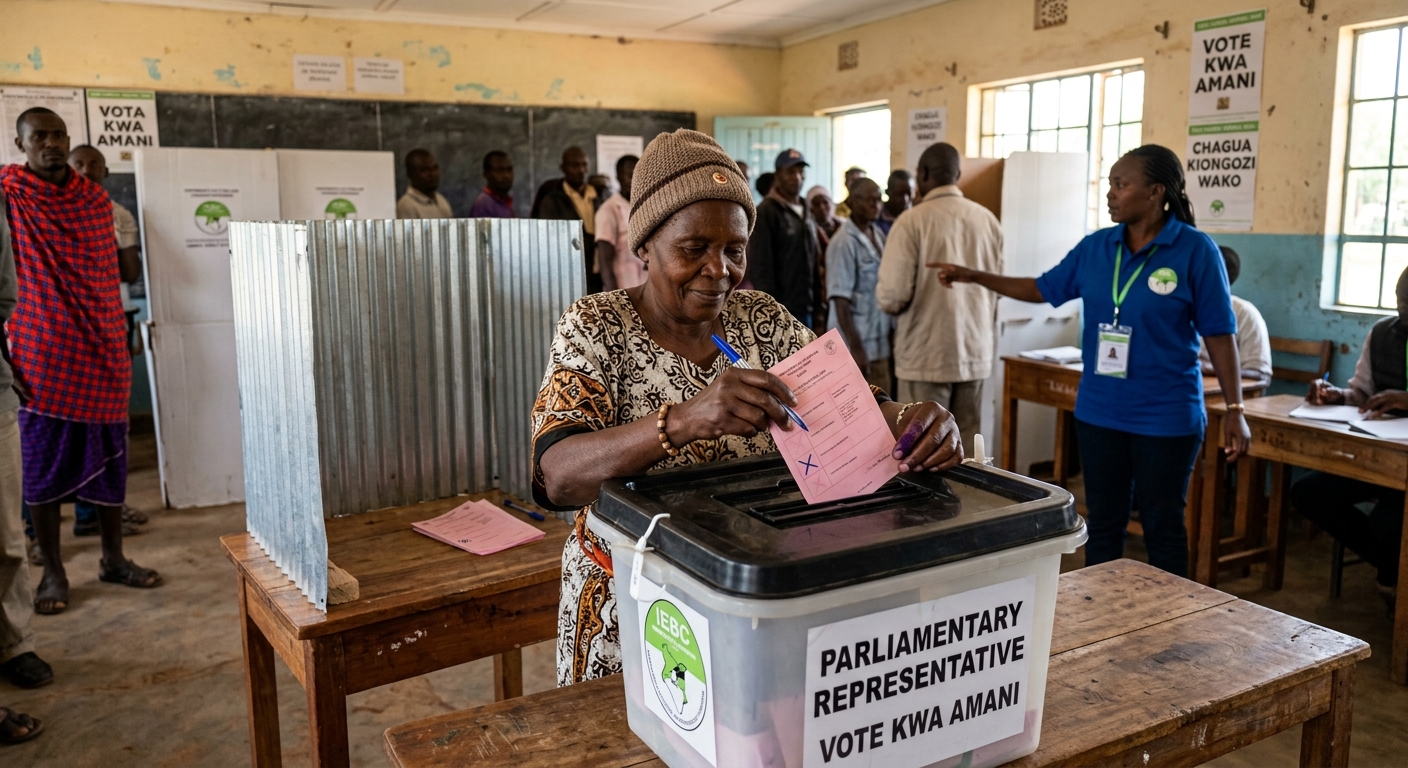
To qualify as a voter in a Kenyan election, one must be a Kenyan citizen, be above the age of 18, hold a national ID or passport, and register as a voter. After registration, voters are encouraged to verify their details through the online and mobile systems set up by the Independent Electoral and Boundaries Commission (IEBC), as required under the elections laws. The details collected include a voter's ID or passport number, name, age, gender, and birthdate — the same details verified through the online and mobile checks.

Privacy in The Era of Big Data
‘Data is the currency we use to access free services’ In an age where the Internet does not forget, access to technology and technological devices is not only easy but cheap. People are using all kinds of tech products and services and most users sign on to these services without reading through the fine print […]

The Political Economy of Skills in the AI World.
The tech bros have over the past year or so made one message very clear. AI will replace most of our jobs in the very near future. Top of the chopping board in this messaging has been the replacement of computing and engineering jobs that just a few years ago were the crown jewel of […]