AI in Everyday Work & Life
A couple of weeks ago, I put out a survey on my socials titled ‘AI in Everyday Work & Life: Insights for Policy and Innovation.’ The idea behind this survey was to start to understand how different people are using AI and the new and emerging models in their day to day life, and if there is anything from this that policy makers could learn from in the development of data policies that should adequately meet the needs of AI developers and users.
For this survey that is still available here, I received 19 responses (n=19) and below is a summary analysis of the findings.
The responses received were from 4 countries: Kenya (16), Uganda (1), Ghana. (1) and Malawi (1)
The Key findings at a glance:
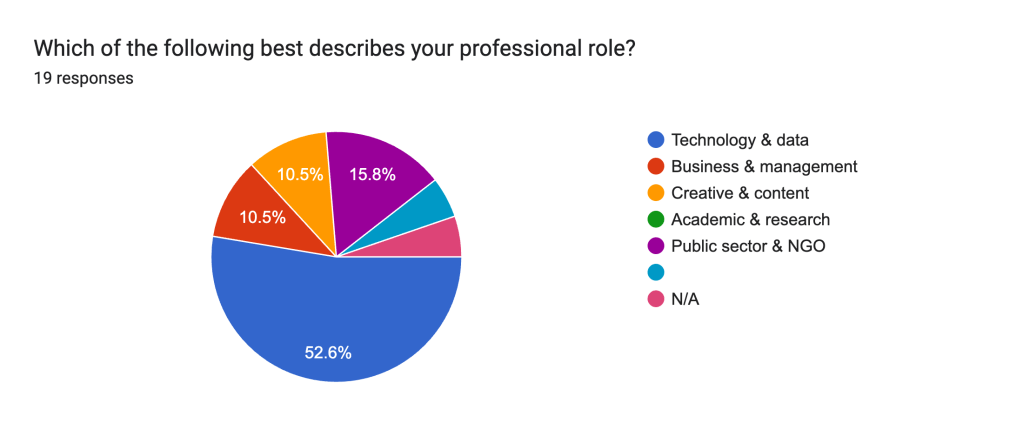
52.6% of those surveyed worked in technology and data, giving us a good understanding of the technical capacity of those involved in AI.
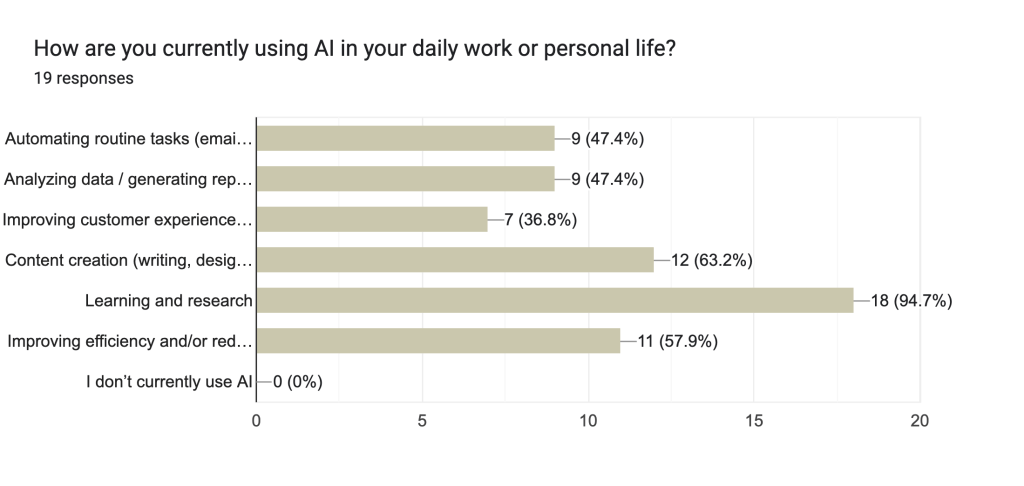
On the question on how the respondents are using AI in their daily work, learning and research had the highest use.
63.2% of the respondents reported significant improvement in their productivity, creativity and decision making and only 5.3% reported not having seen any change with their use of AI tools which might explain why one respondent indicated that, “Many people give LLMs bad prompts, which betrays their ignorance of the limitations of these tools.”
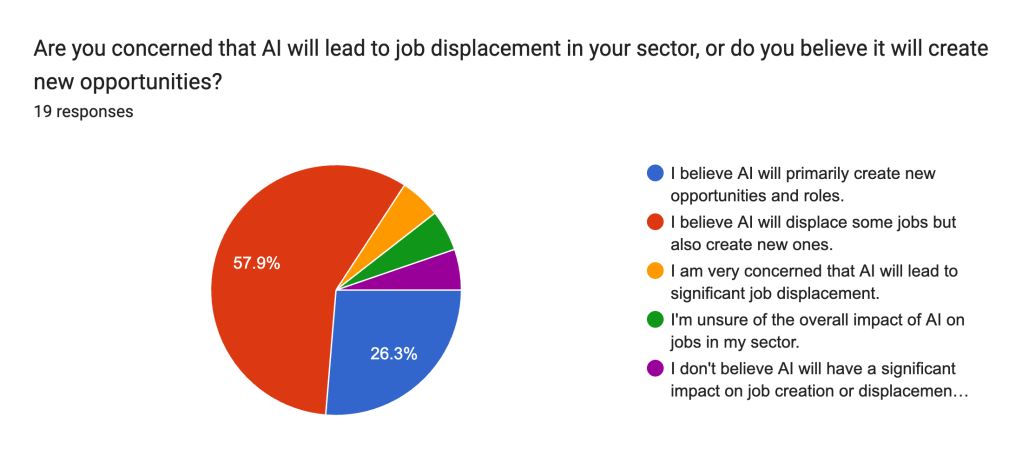
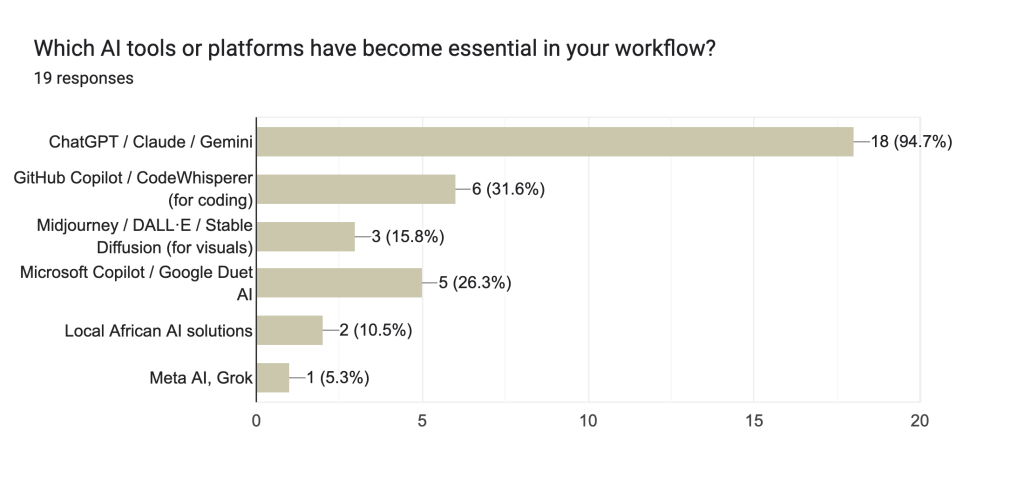
The AI tools that were most popular were the popular GPTs. 57.9% of the respondents believe that while AI will most definitely displace some jobs in their industry, it will also create opportunities for new jobs.
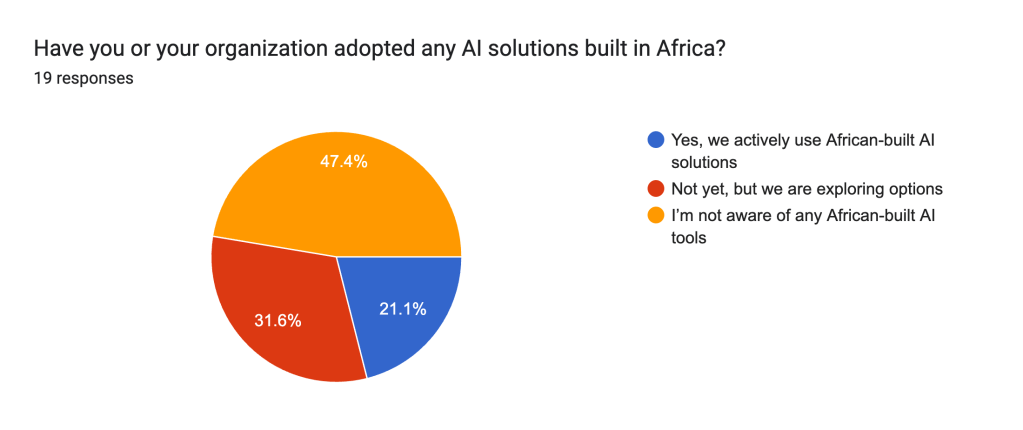
While most respondents were not aware of any locally/Africa developed AI solutions, it is encouraging to see that others are already using Africa built solutions like sanifu.ai and DPE Interch platform; and that another group is exploring solutions out there. One respondent indicated that, “Africa should come up with more AI innovations to avoid being left out of AI disruptions.“
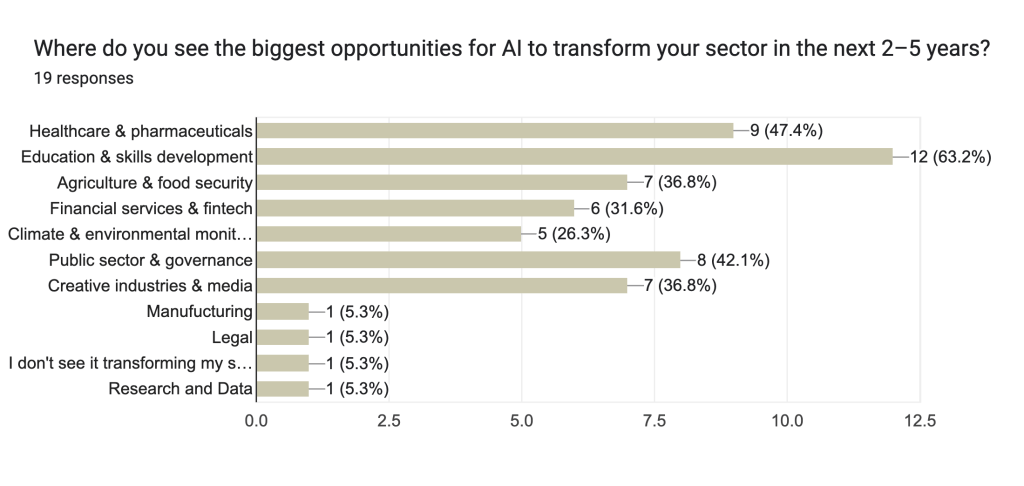
Education and skills development presents the highest opportunity for AI transformation according to the respondents with Healthcare and Pharmaceuticals coming in second. I wonder if this is a sign of where the highest disruptions will be seen…
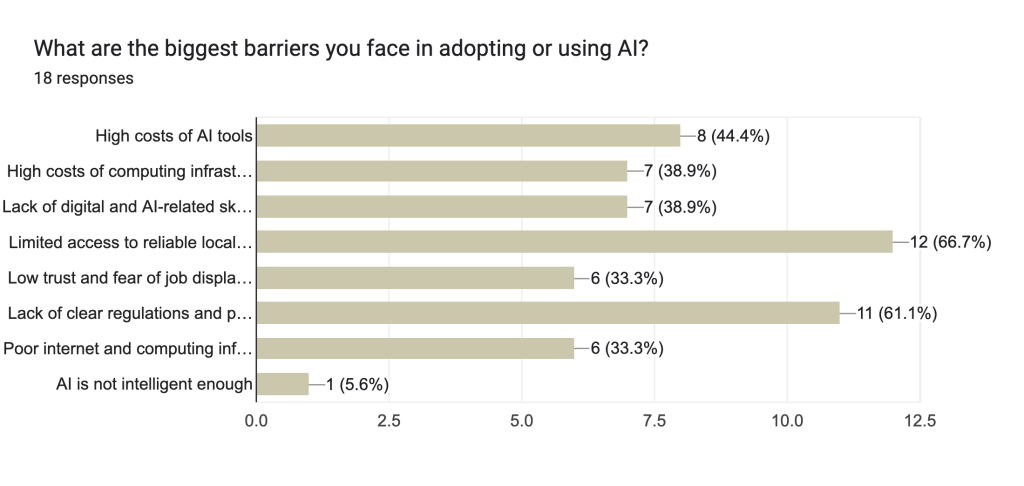
Access to local datasets remains a big challenge and opportunity towards the actualization of the AI dream.
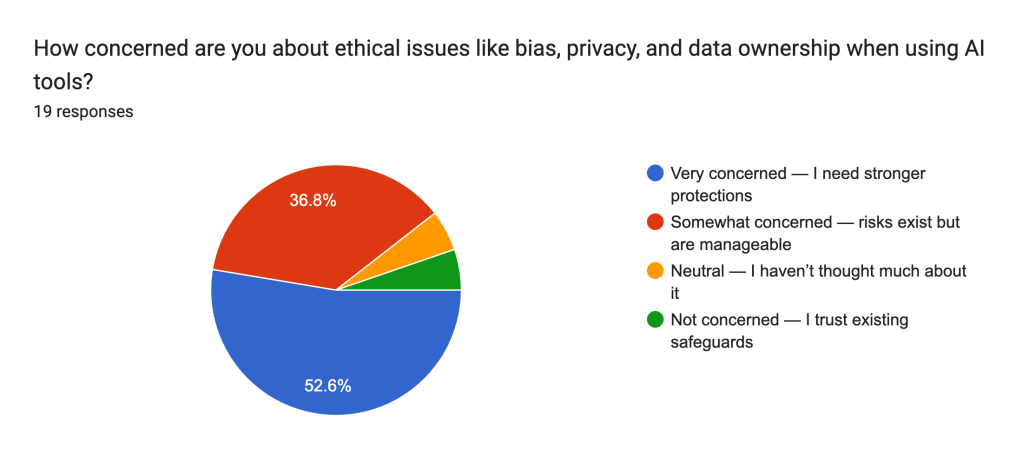
Just as the lack of clear regulations and policies is also a big concern for AI practitioners, this gap presents a great concern on the ethical element with most requiring stronger protections. Most of the respondents also prefer a hybrid model of governance that incorporates both global principles and local context implementation, with one of the respondents indicating hope that AI safety will be a priority in the development phases of these technologies.
It is not new that infrastructure that drives AI is quite expensive. We have seen mind boggling figures in the news on how much some companies spend on hosting costs and this is where the true barrier is on the actualization of Africa developed AI solutions. Investments and deliberate initiatives towards cheaper solutions e.g edge computing would be a game changer in the sector.
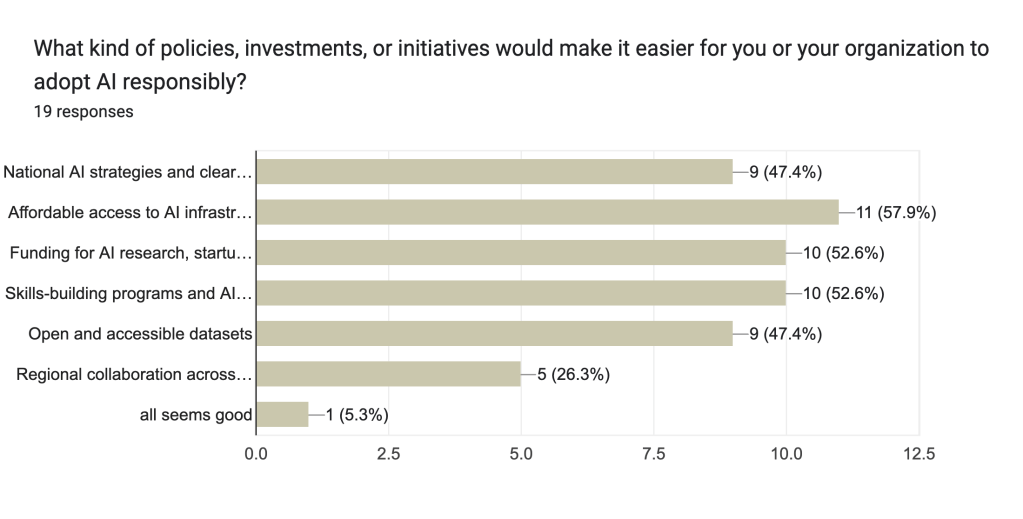
Nothing could conclude this post better than this comment that came in from one respondent, “AI is a tool, how it is used depends on the organisation. It can lead to management better understanding job design and organisation to optimise cohesion and productivity with it coupled with training and continuous upskilling of staff or it can lead to the contempt of subordinates by their managers to undermine what they do as replaceable and heighten unethical treatment of staff.”
Newsletter
New essays, straight to your inbox
Occasional writing on data, AI and policy in Africa. No spam, unsubscribe anytime.
Related reading
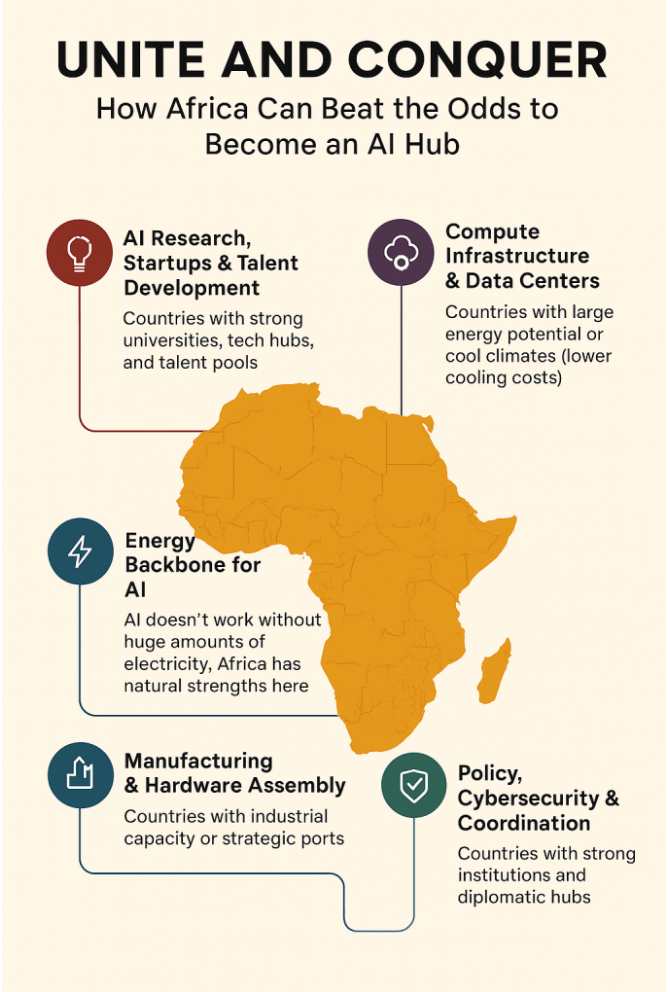
Unite and Conquer – How Africa Can Beat the Odds to Become an AI Hub
A few weeks ago, in his keynote to Kenyans, the president of Kenya admitted that building AI data centers in Kenya (as it is in many countries) is a pipe dream. This followed an agreement signed between Microsoft, The Government of Kenya and G42. He admitted that, to build an efficient data center requires about […]
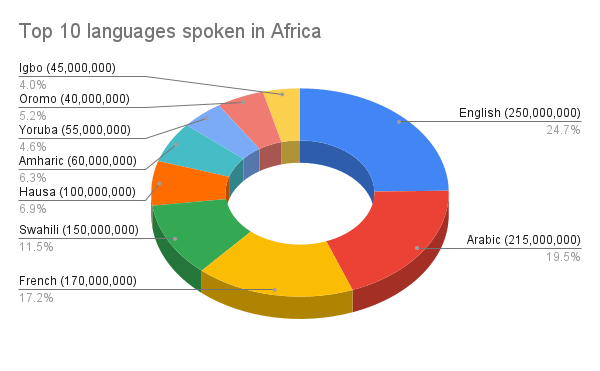
The Paradox of Language Data
A few days ago, speaking to a couple friends, I asked them the cliché thing you ask people who do not speak your native language, ‘how do you say ‘hello’ in your mother-tongue?’. My friends are a little over the youth group age, grew up in a setting where they spoke their native language and […]
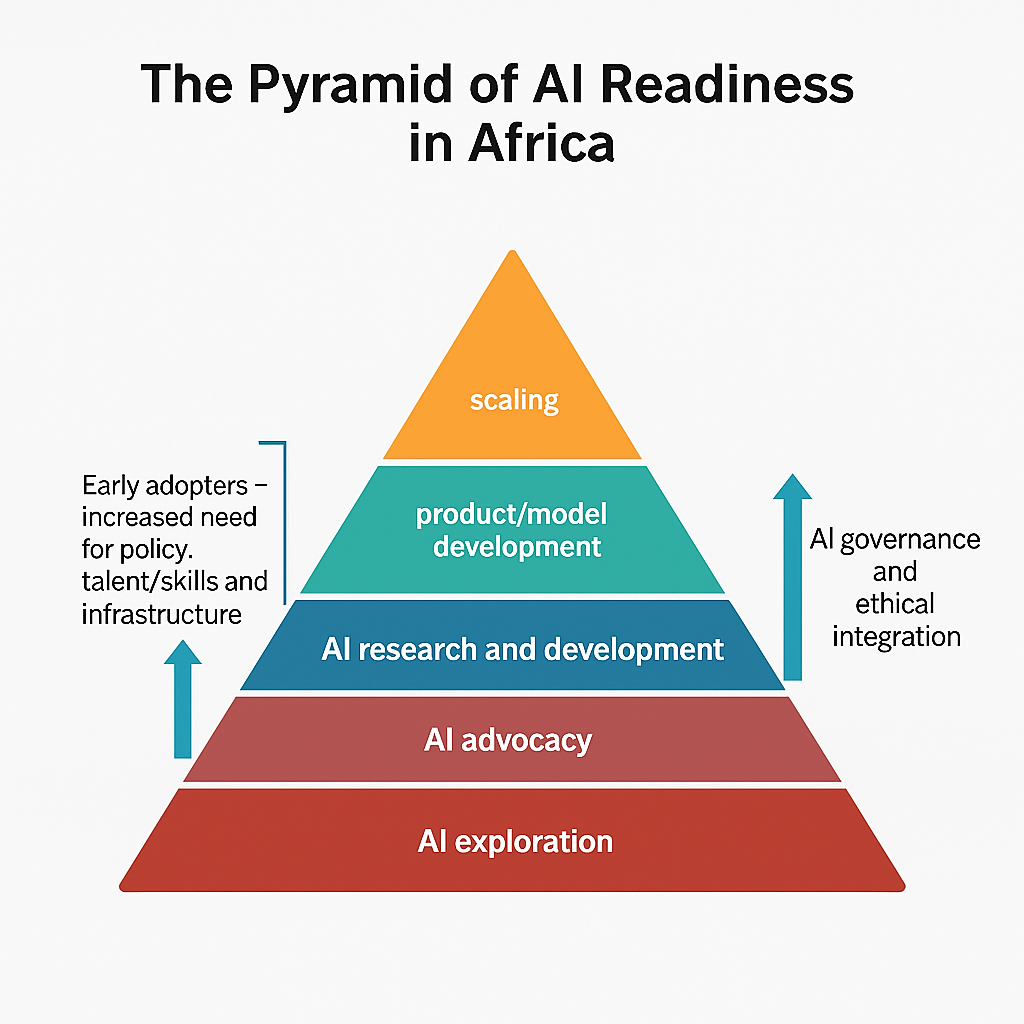
The Journey to AI Maturity in Africa.
Around the world, AI is no longer a futuristic concept but a present-day reality transforming industries and societies. For Africa, embracing AI is a critical step towards economic growth, innovation, and solving unique challenges. However, the path to AI maturity is not linear. It’s a journey best understood as a…