Artificial Intelligence, The Elephant in the Africa Room.
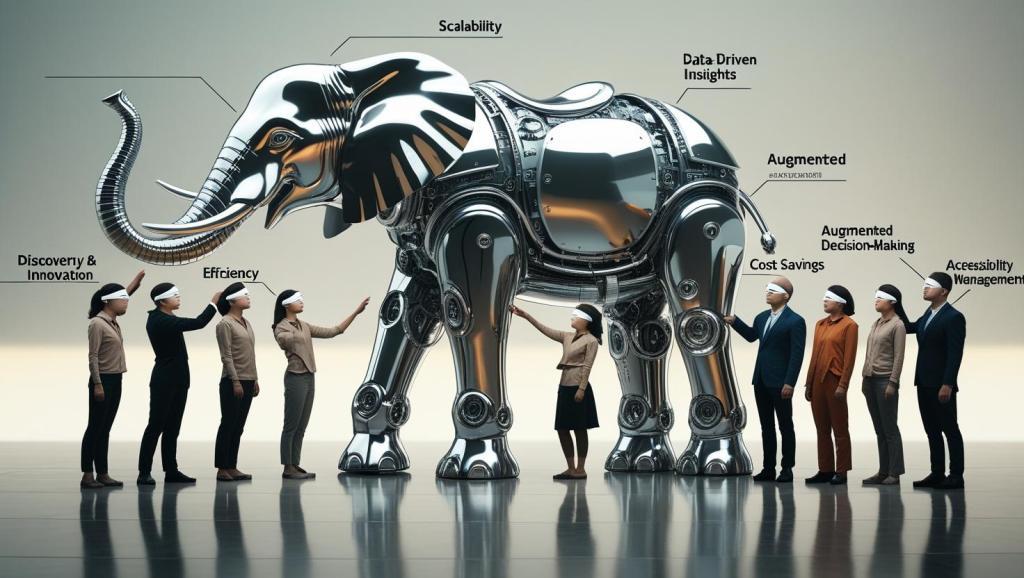
In the timeless parable of the blind men and the elephant, each man touches a different part of the creature; a tusk, a tail, a leg and comes to a wildly different conclusion about what he’s experiencing and what an elephant is to them. One insists it is a spear, another a rope, another a pillar. None is entirely wrong, but none sees the full reality.
This parable has never been more relevant than it is today, especially when we talk about Artificial Intelligence in Africa. Like the elephant, AI is vast, complex, and multi-sided. Each of the different players and actors: policymakers, entrepreneurs, workers, educators etc grasps a different part of its potential. In Africa, our vantage points vary even more due to historical inequities, infrastructure gaps, and the promise of leapfrogging old systems which, in many cases, fail to be.
The image above represents the stakeholders in the AI ecosystem in Africa where each player is exploring the value that AI can bring into their work. Automation, Efficiency, Cost Savings, Data-Driven Insights, Personalization, Scalability, Risk Management, Discovery & Innovation, Augmented Decision-Making, and Accessibility & Inclusion. Each represents an opportunity and a caution.
Below, we explore these different elements, their pros and cons, and what they mean for our societies:
1. Automation
Pros: Replaces repetitive, dangerous, or low-skill tasks. For African agriculture, AI can automate irrigation, pest detection, and yield forecasts.
Cons: Job disruption is real! Many workers lack safety nets if machines replace them. Not a new concept, but very disruptive at scale beyond manufacturing.
The Inevitable: Automation is accelerating. But so is the need to reskill.
The Unseen: Over-automation can erode human judgment and local experience and knowledge.
The Obvious: Productivity gains can be huge if paired with social protections.
2. Efficiency
Pros: AI optimizes workflows, cuts waste, and speeds up processes like in clearing and forwarding.
Cons: Efficiency can become a false dependency if it overrides equity and care.
The Inevitable: Industry and governments will adopt AI to save time and resources while ensuring efficient output.
The Unseen: Efficiency can centralize power in the hands of data-rich actors.
The Obvious: Done well, it can free up funds for critical services.
3. Cost Savings
Pros: Automation, predictive maintenance, and smart resource allocation reduce costs. This is vital where budgets are tight.
Cons: Short-term savings can mask long-term social costs, like unemployment and job displacement.
The Inevitable: Organizations will be pressured to adopt AI to remain relevant and competitive.
The Unseen: Savings might be captured by global vendors rather than local communities.
The Obvious: AI can help stretch limited public resources further.
4. Data-Driven Insights
Pros: AI can surface patterns in health, climate, or education data that were previously invisible.
Cons: Biased/incomplete data leads to biased/misleading insights, worsening inequality.
The Inevitable: More decisions will be shaped by AI analytics.
The Unseen: Data privacy risks are often ignored in pursuit of insights.
The Obvious: High-quality data is essential to AI’s success.
5. Personalization
Pros: AI tailors services like educational content or health messages to individuals.
Cons: It can reinforce stereotypes or manipulate users without consent.
The Inevitable: Personalization will become a norm in digital services e.g personal digital assistants
The Unseen: Cultural nuance can be lost if systems are built elsewhere and only consumed locally.
The Obvious: Personalization can improve engagement and outcomes.
6. Scalability
Pros: AI solutions can scale across countries without needing massive new infrastructure setups
Cons: Scaling too fast can leave ecosystems and communities behind or amplify harm.
The Inevitable: Africa’s youthful population will drive demand for scalable solutions.
The Unseen: Local SMEs may struggle to compete with big platforms especially by investment required to compete.
The Obvious: Scalability is critical to meet large-scale challenges.
7. Risk Management
Pros: AI detects fraud, predicts crop failures, and anticipates disease outbreaks.
Cons: Over-reliance on AI systems can reduce human vigilance and create blind spots.
The Inevitable: Governments and insurers will embrace AI to reduce exposure.
The Unseen: Who bears liability when AI gets it wrong?
The Obvious: Risk management improves resilience.
8. Discovery & Innovation
Pros: AI accelerates breakthroughs—from drug discovery to renewable energy modeling.
Cons: Innovation hubs and labs often sit far from where solutions are most needed.
The Inevitable: African countries will race to build AI R&D capacity.
The Unseen: Innovation can deepen dependency on foreign intellectual property which can hurt supply down the line with protectionist policies.
The Obvious: New solutions are urgently needed for Africa’s common challenges.
9. Augmented Decision-Making
Pros: AI helps leaders make more informed, data-driven decisions and policies.
Cons: Decisions can become opaque if people defer too much to algorithms and reduce consultations.
The Inevitable: AI will increasingly shape policy and business strategy.
The Unseen: Citizens may lose trust if they don’t understand how decisions are made.
The Obvious: Augmentation done right can support better governance.
10. Accessibility & Inclusion
Pros: AI can translate languages, generate captions, and adapt interfaces to different abilities.
Cons: Accessibility features are often an afterthought, not designed in from the start.
The Inevitable: Demand for inclusive technology will rise as connectivity spreads.
The Unseen: Algorithms can exclude marginalized groups if data doesn’t represent them.
The Obvious: Inclusion is essential for equitable development.
Seeing the Whole Elephant Yet?
The story of the blind men reminds us that no single perspective is complete and demand for AI is unique for different circumstances. To build AI ecosystems in Africa that truly serve people, we must:
- Invest in education and reskilling – policies, capacity, skills, R&D
- Invest in data ecosystems that ensure complete datasets that are also inclusive.
- Create policies that protect workers while encouraging innovation.
- Strengthen local AI development to avoid global dependency.
- Keep equity, transparency, and human dignity at the core.
AI is inevitable but how we shape it determines who it benefits, who it excludes, and who it empowers. This is all up to us. Let’s take off the blindfolds and see the whole elephant, together.
Newsletter
New essays, straight to your inbox
Occasional writing on data, AI and policy in Africa. No spam, unsubscribe anytime.
Related reading
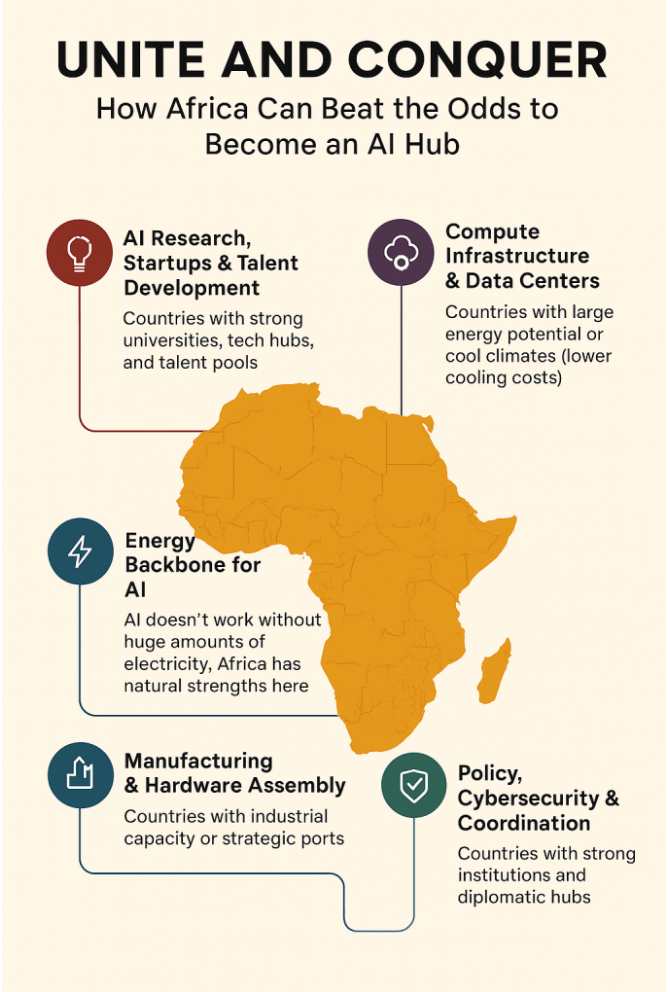
Unite and Conquer – How Africa Can Beat the Odds to Become an AI Hub
A few weeks ago, in his keynote to Kenyans, the president of Kenya admitted that building AI data centers in Kenya (as it is in many countries) is a pipe dream. This followed an agreement signed between Microsoft, The Government of Kenya and G42. He admitted that, to build an efficient data center requires about […]
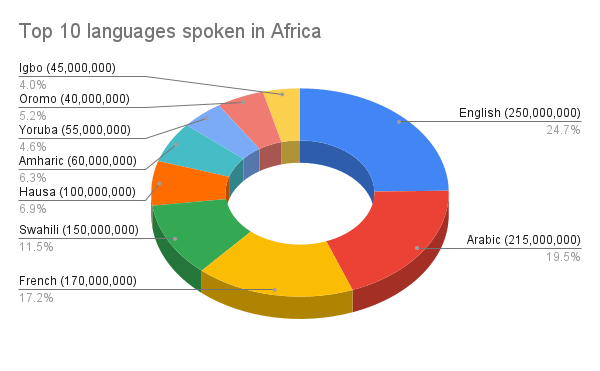
The Paradox of Language Data
A few days ago, speaking to a couple friends, I asked them the cliché thing you ask people who do not speak your native language, ‘how do you say ‘hello’ in your mother-tongue?’. My friends are a little over the youth group age, grew up in a setting where they spoke their native language and […]
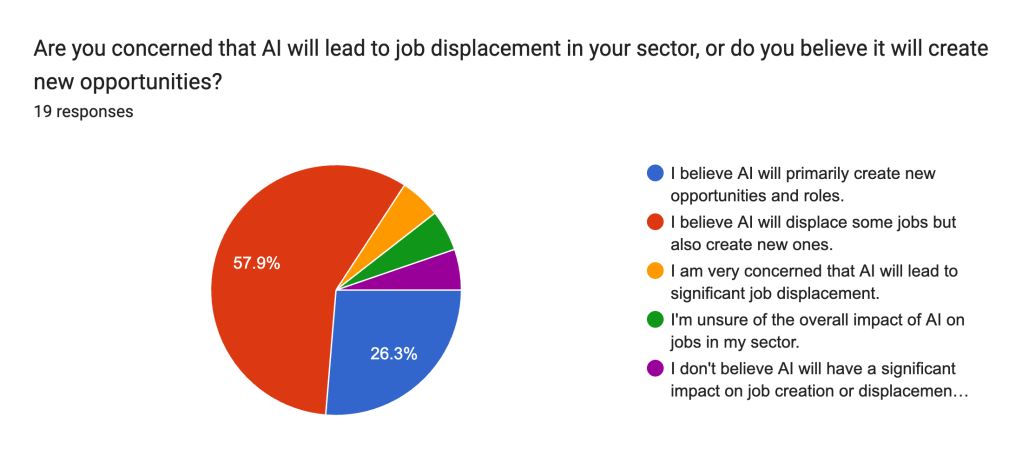
AI in Everyday Work & Life
A couple of weeks ago, I put out a survey on my socials titled ‘AI in Everyday Work & Life: Insights for Policy and Innovation.’ The idea behind this survey was to start to understand how different people are using AI and the new and emerging models in their day to day life, and if […]